This change grew out of a conversation with an organizer. The complaint was simple: customers say they miss short rounds. They want the product, it's sitting in their favorites, but the round opens and closes faster than they get into the app.
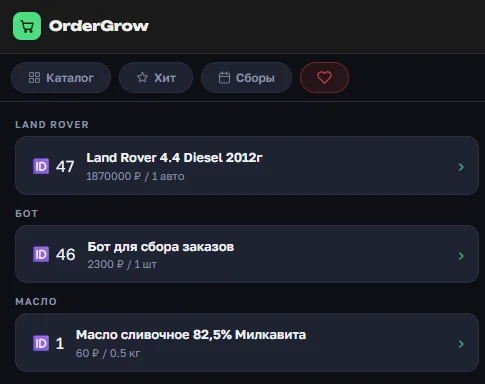
The gap was even visible in the interface itself. The "Favorites" section showed a note under a hidden product saying it would become available once published. The promise was there; a notification that it had actually happened was not. You had to go in and check by hand.
How it works
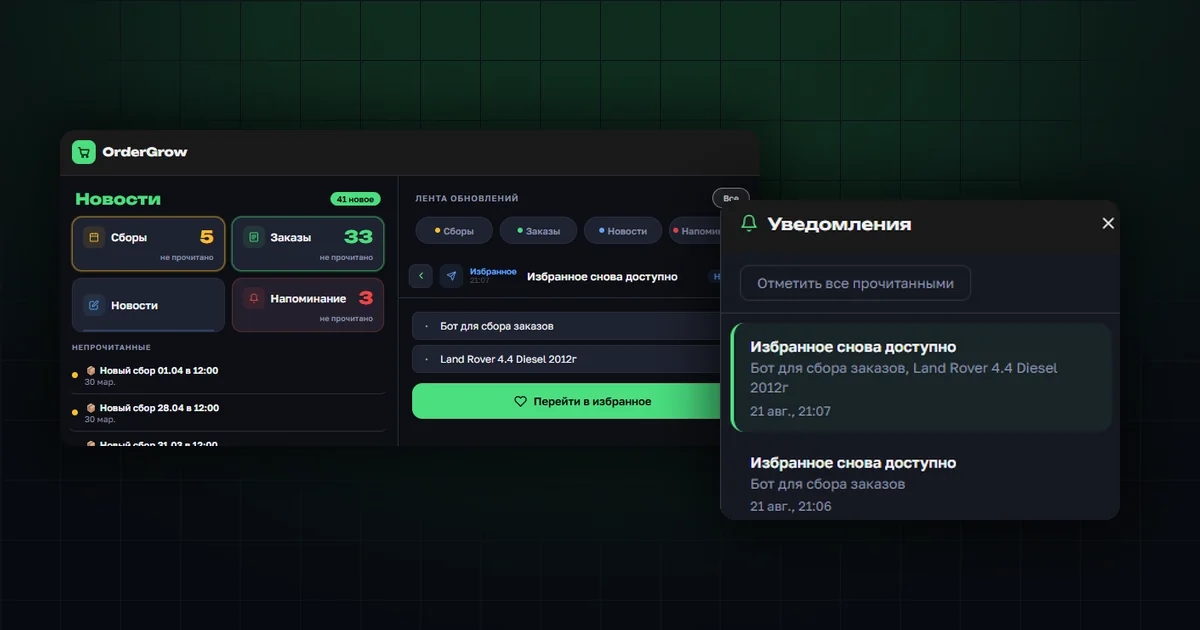
As soon as an organizer publishes a product that someone has in their favorites, that customer gets a notification: "A favorite is available again".
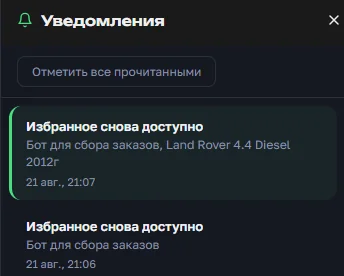
It arrives through four channels at once: a push on the device, the bell inside the app, the news feed and Telegram. The same set that already works for order statuses, delivery and the wallet — no separate channel was created for this.
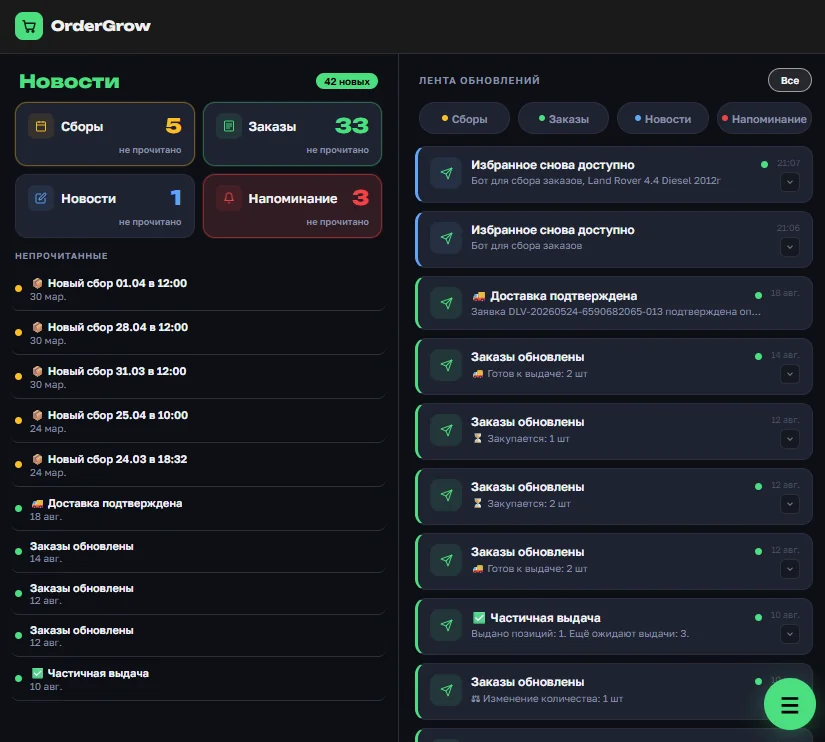

The push itself carries a short line with a count, because a notification on a lock screen shouldn't be a wall of text. The bell, the news feed and Telegram get the full list of names: there's no length limit there, and knowing which products are meant matters more than brevity.
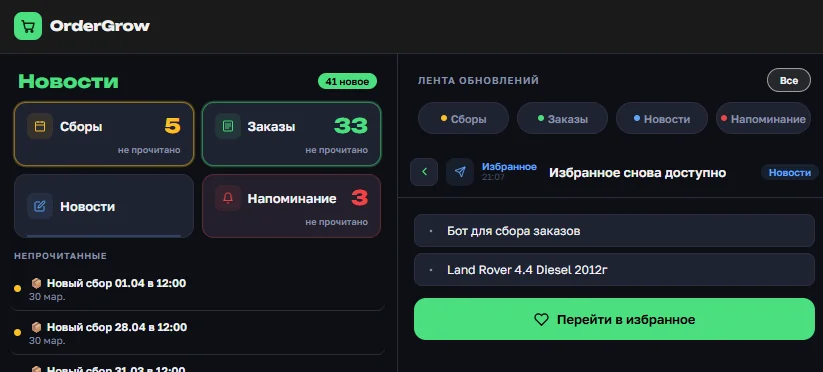
Tapping always leads to the "Favorites" section, whether one product came back or five. It looks like a detail, but there's a decision behind it: someone with several freed-up positions is more likely to want to rebuild the whole order than to open a single card.
When the notification won't come
No notification is sent if the product is published but still can't be ordered — the whole stock has already been taken by other customers. Calling someone into the app to see an unavailable item is worse than staying quiet: that's disappointment instead of a purchase.
If an organizer publishes several products in one action, the customer gets one notification with a list rather than five in a row. Only events that genuinely happened at different times are split up.
How many people use this
Before building it, we looked at whether the "Favorites" section is used at all. The data comes from live shops; empty and test ones are excluded from the sample.
Across fifteen working shops there were 556 favorites records, 476 of them active — that's 86%. There are almost no saved products that lost their meaning long ago: people use the section as a working tool rather than a dumping ground.
The five shops with the most active favorites look like this:
| Shop | Records | Active | Customers | Products |
|---|---|---|---|---|
| Shop 1 | 120 | 108 | 31 | 115 |
| Shop 2 | 102 | 88 | 61 | 86 |
| Shop 3 | 60 | 52 | 22 | 56 |
| Shop 4 | 55 | 34 | 35 | 50 |
| Shop 5 | 50 | 39 | 37 | 46 |
Two figures in this table are worth reading together. The second shop has fewer records than the first, but twice as many customers: 61 against 31. These are different patterns — in one place a small group uses favorites deeply, in another many people use them lightly. The notification is equally useful either way; it will simply carry a list more often in the first case and a single position in the second.
One more observation: nine shops out of fifteen gained a new favorites record within the last week. The section isn't a one-off experiment from launch day; people keep using it.
And the point that settled our main worry before release. We were afraid that publishing a popular product would fire off a volley of notifications to hundreds of people at once. It turned out there's no such concentration: most products have one or two people who favorited them, and the maximum across the whole platform is five. One tap can't produce a mass mailing.
What it gives the organizer
Favorites are the only place in the app where a customer states what they want themselves. Not a guess based on order history, but a direct action: they tapped the heart because they want that product.
Until now that signal went unused. Publishing a product now automatically reaches the people who were waiting for it — with no mailing to the whole base and no manual reminders. The organizer doesn't have to remember who was promised what.
It works especially well on the short rounds this was built for. A round lasting a couple of hours used to be seen only by whoever happened to be in the app. Now it reaches the people who actually need the product.